This is the place to be for those who are serious about effectuating positive change in Forbes Park Colorado

Understanding the Governing Documents
Articles of Incorporation, Covenants, By-Laws, Policies, Common Interest Code
10/13/20241 min read
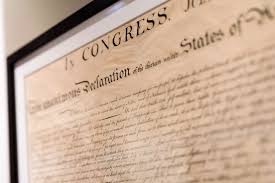
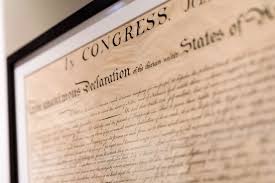
When was the last time you looked at the articles of incorporation? These are titled as "FORBES PARK LAND OWNERS ASSOCIATION ARTICLE OF INCORPORATION." This document created the Forbes Park Land Owners Association.
Among other things, this document is what gives very broad authority to the Board of Directors. Under Article VIII, it is stated: "The affairs of this Association shall be managed by a Board of not less than three Directors." Next, notice that two of the original board members were from New York. How much could they possibly know about the realities of living in a common interest community in Colorado, especially half a century later?!?
Next, notice that Article Iv references "dissolution of the corporation." Obviously, dissolution would be drastic but dissolution followed by a reforming of the corporation is a bona fide legal mechanism.
However, dissolution is not necessary because Article Viii provides for the amendment process by "by the affirmative vote of not less than two-thirds of the eligible votes of each of the Class A and Class B members."
Obviously, getting two-thirds affirmative vote might be next to impossible considering that participation in board of directors meetings is less than 1% of all landowners. We have a lot of passive landowners.
However, no such vote is needed for a bylaw. The articles of incorporation, the covenenants and the common interest code provide no precise definition of a bylaw. Thus, their definition is established by precedence. And to that point, a bylaw is commonly understood to be a regulation established by the governing authorities AKA the board of directors. Landowners don't have a say on bylaws. Bylaws can be enacted by any regime. Thus, they can change from one regime to the next.
Thus, bylaws are authoritarian. Bylaws cannot contravene the articles of incorporation, the covenenants and the common interest code. This is why an amendmant has so much more force than a bylaw.